


ASKA was provided by Thunderful Games for review. Thank you!
This game is in Early Access, so all features and performance are subject to change.
Some of my fondest memories of playing video games with friends come from playing survival games with them. Games like Rust and Raft, and most recently, Abiotic Factor, bring out some of the most hilarious and enjoyable moments I will always remember. ASKA is another one of those games, and it has an intriguing premise, world, and some great gameplay elements that I really enjoy. But it definitely needs some balancing to be up there with some of the best in the genre.
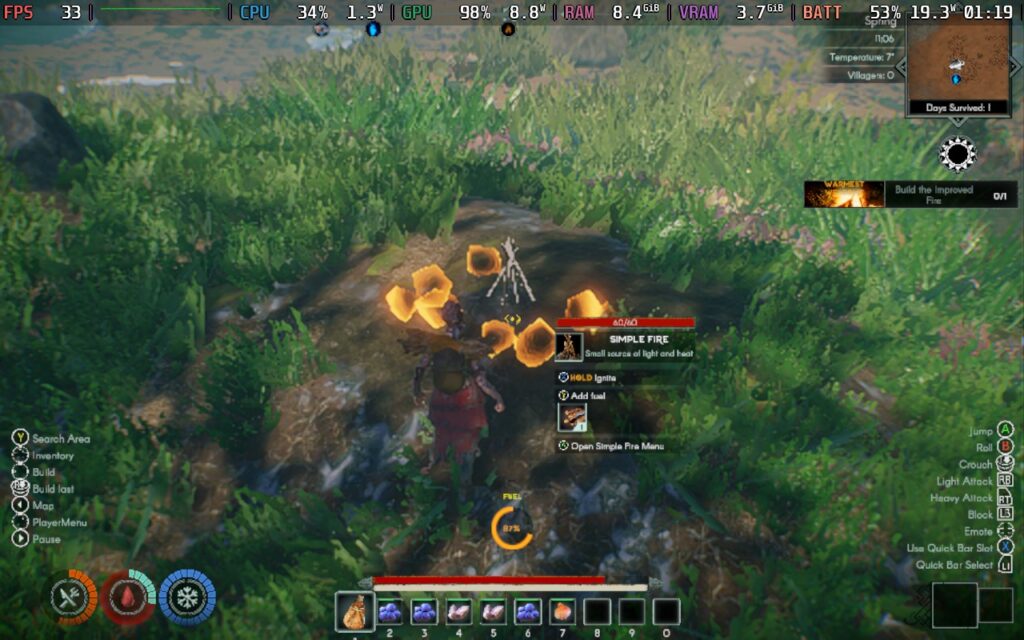
Like other survival games, ASKA will primarily have you going around an open world where you will gather resources in different ways, fight monsters, craft new weapons and buildings, and create your own home. These mechanics are pretty similar to other similar titles in the genre. You will have to craft your tools to get more resources to build different structures to grow out your base, which you can find all along the world, and you are encouraged to traverse across the world and explore so you can defeat monsters and get new gear. However, ASKA sets itself apart in a couple of ways.
Instead of going it alone and needing to get everything done yourself, you will summon villagers to rebuild your old tribe. You will focus on sheltering and assigning them jobs to help them get more resources and automate different processes like woodcutting. It’s a neat implementation of this idea, and I love the focus instead on building up your tribe/village of NPC workers to help you out and gather materials. For the most part, these villagers you summon are helpful, though there are moments when they can feel like they are in the way.
There are also some nice quality-of-life enhancements included in the game. You can send out a radar-like signal from your person to highlight objects on the ground that you can pick up or rocks you can mine. It’s a neat way of finding materials that could be easily missed. I also really like how the build menu can be easily accessed without needing to go to a paused menu, and some buildings can be further upgraded when looking at them, which I think is cool. Pinning recipes that you are working on is wonderfully easy, too, making it easy to figure out exactly what you need to get.
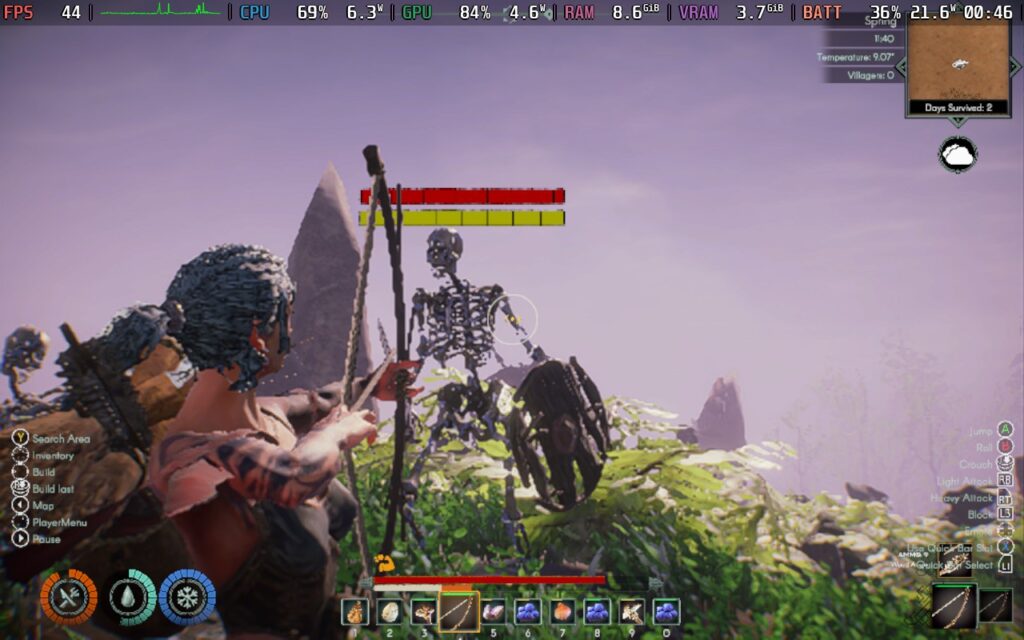
The game does start to slow, especially regarding resource collection and finding the materials needed to summon new villagers. It can also take a while to get the larger resources like wood and stones since you have to carry them over individually. This issue is familiar in many survival games, so it isn’t something specifically in ASKA, but it suffers from this in the early game. I also found combat to be just okay, with higher requirements to create weapons that are effective, and some timers or countdowns, like how fast wood burns in firepits, can feel like they go way too fast.
As for the visuals, I found ASKA to be pretty beautiful. I love the world and how it changes with the weather. It was awesome to run through the biomes and see the hidden caves, towering structures, and interesting landmarks. While it isn’t the most realistic, it does the job well and makes adding buildings an enjoyable sight. Add in the awesome music, and you have a really nice experience while trying to survive the harsh lands.
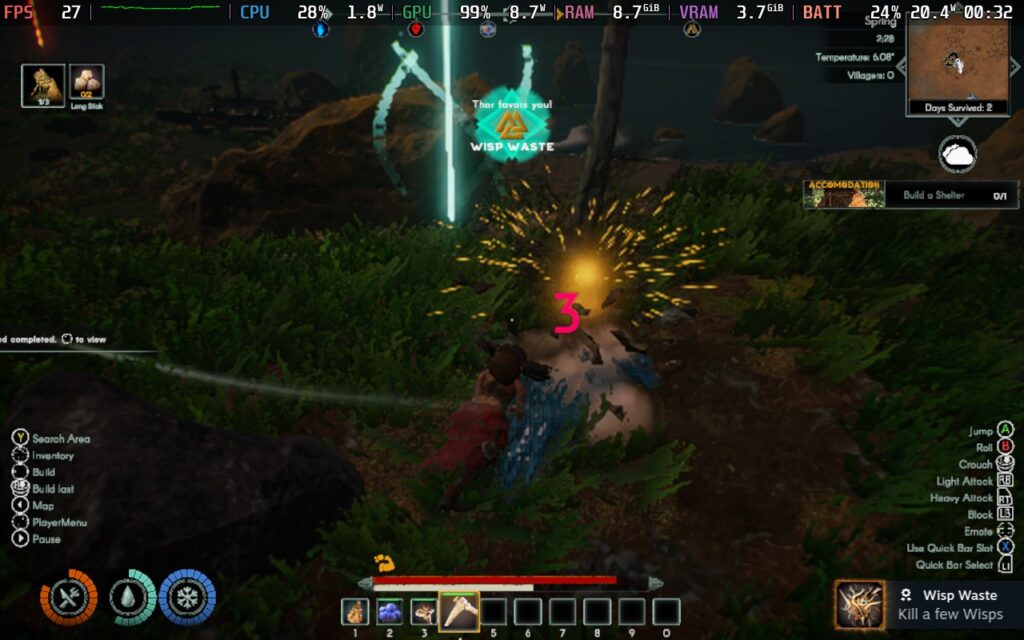
I did have the chance to try out multiplayer in ASKA as well, and man, is it fun. Being able to work together with friends eliminated a lot of the early resource collection issues I had playing alone. When we were working together and taking on skeletons together, it all just clicked. There were still minor issues here and there, but having extra hands to handle them fixed a lot of the problems I had.
Unfortunately, it may not be great to play on the go just yet.
ASKA – Steam Deck Performance
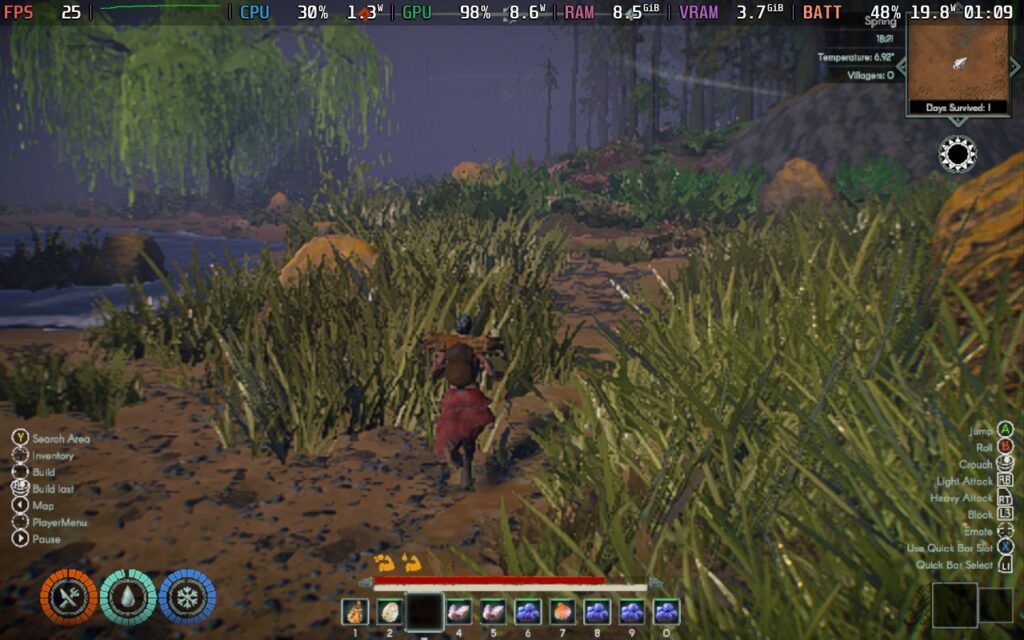
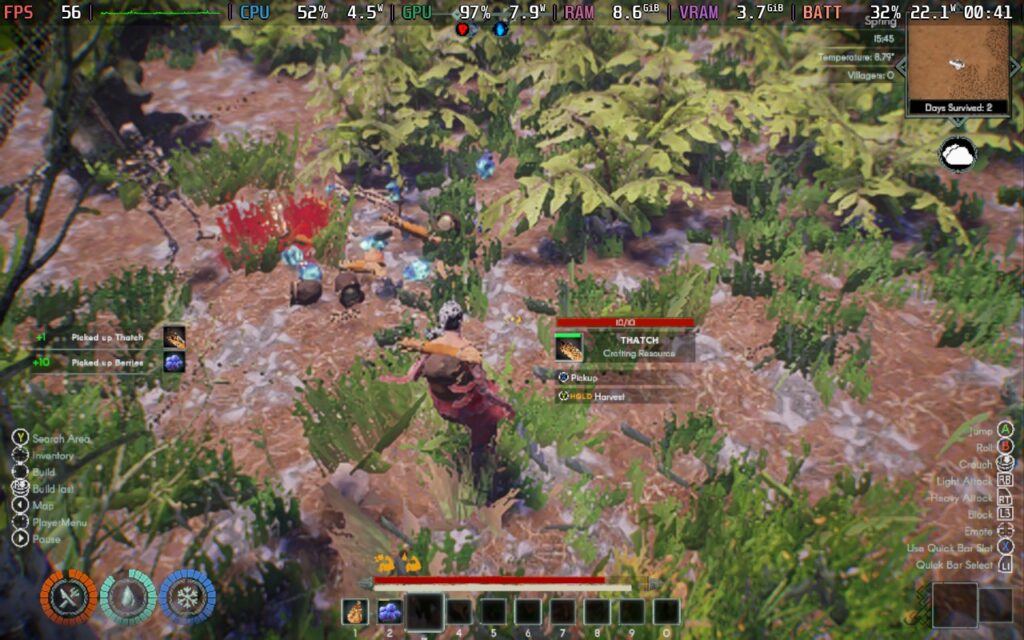
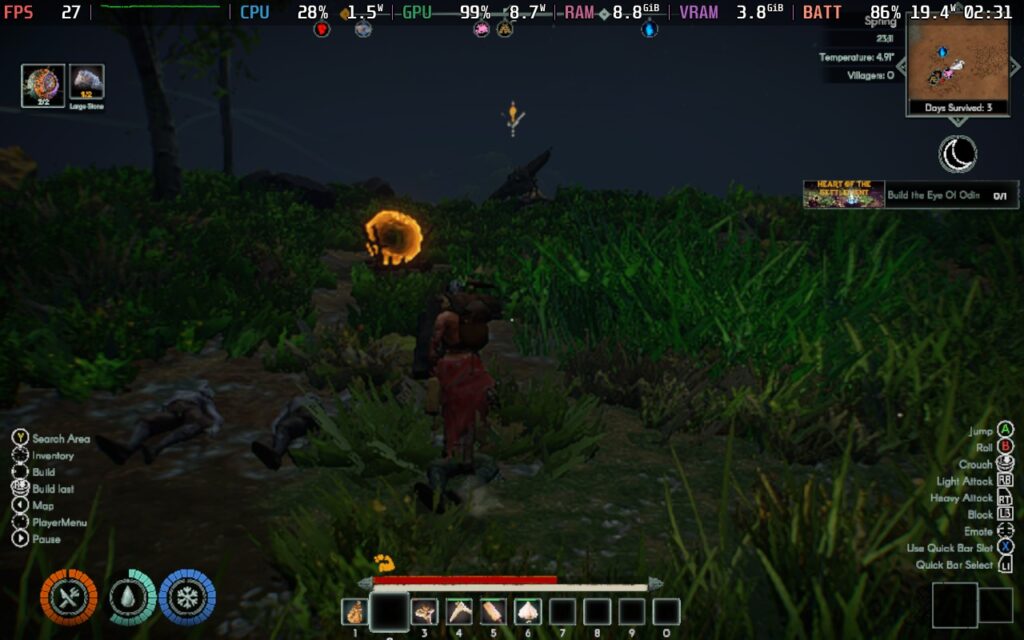
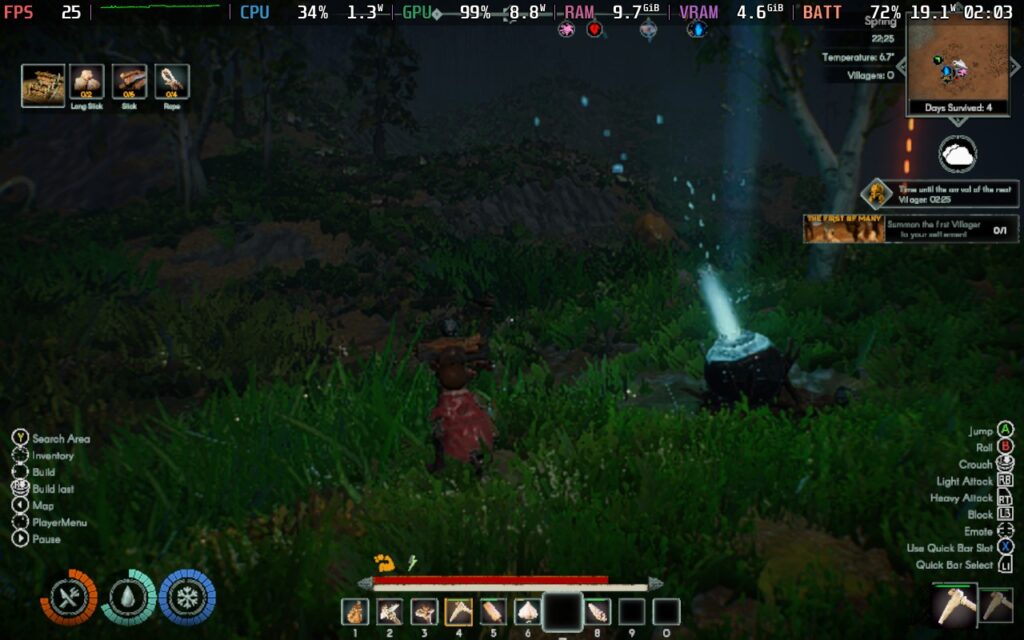
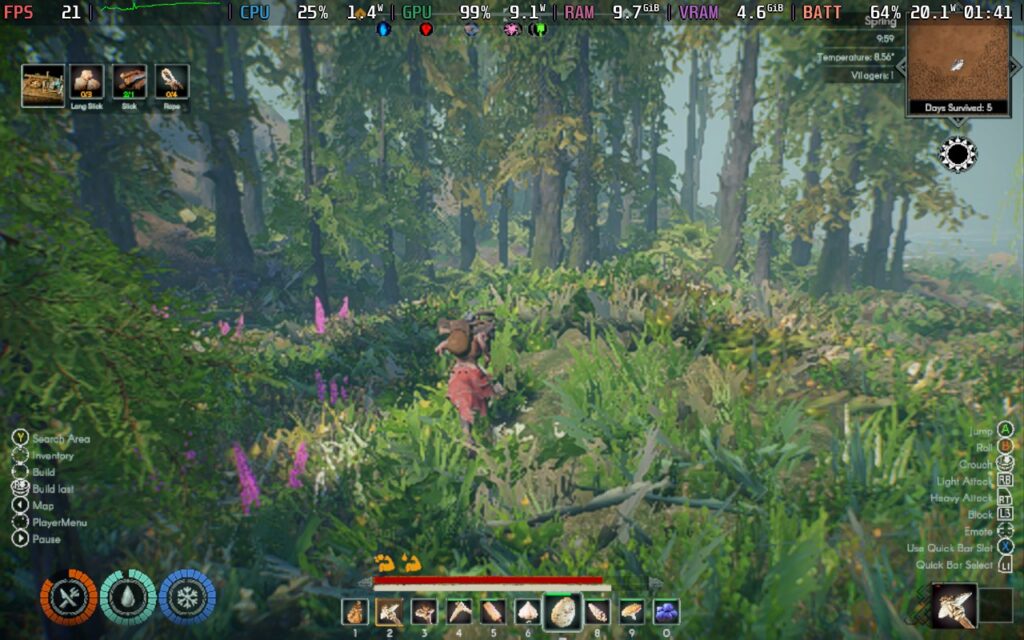
As much as I wanted to be able to play ASKA in the palm of my hand, it isn’t time yet. I tested all the settings and even lowered the overall settings to be extremely blurry at low resolutions and the lowest quality settings with FSR, and it still had areas with drops below 30. Some areas could reach into the 40s, but the starting areas and coastline definitely saw significant drops. It happened enough that I found it hard to manage.
In the end, to make it as playable as possible, I had to force a lower resolution with FSR and low settings overall to mitigate as many drops as possible. I don’t see any other conceivable way to play it on Steam Deck right now. Some menus aren’t extremely straightforward to control, either, which can be an issue.
Accessibility
There aren’t many settings to change just yet, but you can hide tutorials, reduce camera shake, and toggle the intro video and HUD controls. Some menus also have extremely small text, which can be very hard to read.
The game supports 16:10 resolutions and gamepad/controllers, but it doesn’t have cloud saves and doesn’t have HDR settings.
Conclusion
ASKA is an interesting survival game that has some unique ideas that all mesh together really well, but it needs a little more time in the oven before it is widely playable and enjoyable. The focus on building up your village and summoning NPC villagers to help you is awesome, while some great quality-of-life features make it much easier to find what you need. Playing alone highlights some of the early resource collection issues, and there are some areas where balancing would help dramatically (like crafting weapons). Still, these could easily be improved throughout the early access process.
The same could be said for playing on the Steam Deck. It is technically playable, but I find it hard to recommend in this state. Some areas stick above 30, but there are enough areas that continually drop below when on very low-quality settings that make it hard to recommend. I do hope and believe it will get better throughout early access, and with the features it does have so far, it shows a lot of promise. Because of this, I would recommend investing early, even if it isn’t the most playable yet.
Our review is based on the PC version of this game.
If you enjoyed this review, be sure to check out the rest of the content on SteamDeckHQ! We have a wide variety of game reviews and news that are sure to help your gaming experience. Whether you’re looking for news, tips and tutorials, game settings and reviews, or just want to stay up-to-date on the latest trends, we’ve got your back.